
Introduction to Missing Teeth and Tooth Replacement Options
Missing teeth can affect your smile and your ability to chew. For many people, it can also lower confidence. When you lose a tooth, it is important to find the best tooth replacement options. Two popular choices are dental implants and dental bridges. Both can help restore your smile. However, each has its own benefits and drawbacks. In this blog, you will learn about dental implants vs bridges and how to choose the right solution for missing teeth.
What Are Dental Implants?
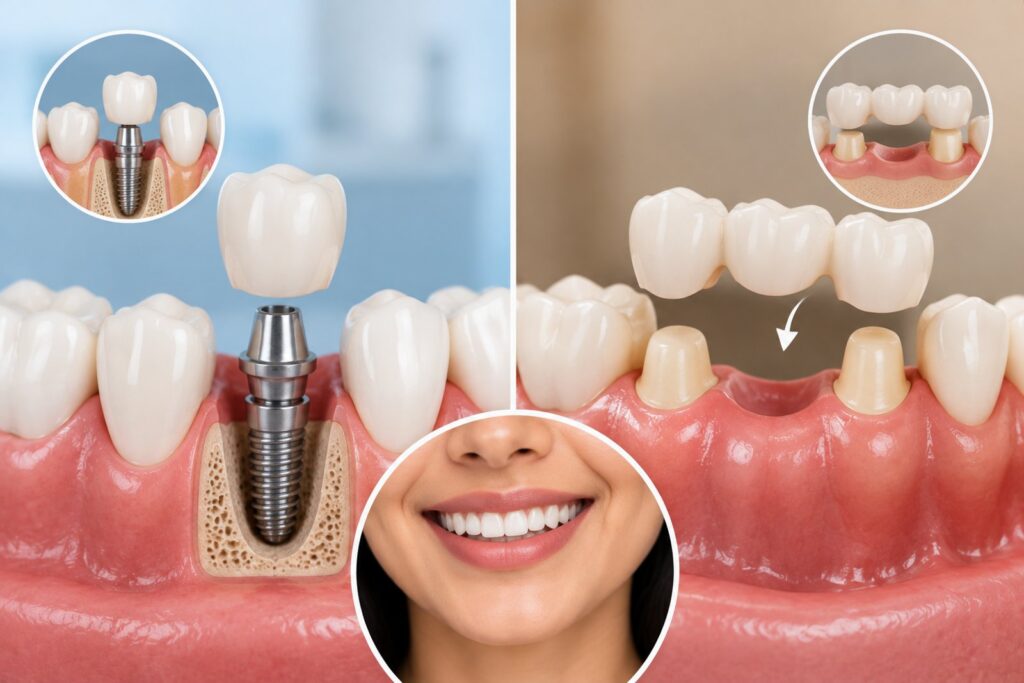
Dental implants are artificial tooth roots made of metal, often titanium. Dentists place them into your jawbone during a simple surgery. After the implant heals, they attach a crown that looks and feels like a real tooth. For many people, dental implants offer a long-lasting solution. In addition, implants do not rely on nearby teeth for support.
According to the American Dental Association, dental implants are safe and effective for most adults.
What Are Dental Bridges?
Dental bridges are another way to fill the gap left by missing teeth. A bridge uses one or more false teeth held in place by crowns on the teeth next to the gap. Dentists shape these nearby teeth to fit the crowns. Then, they attach the bridge, which “bridges” the space. Dental bridges are a common choice for replacing one or more missing teeth in a row.
Many people choose bridges because the process is faster than implants.
Key Differences Between Dental Implants and Bridges
Although both options replace missing teeth, there are key differences. For example, dental implants are placed in the jawbone, while bridges use nearby teeth for support. In addition, implants can last longer than bridges. However, bridges may be better for people who want a quicker fix.
Pros and Cons of Dental Implants
Dental implants offer many benefits, but there are also some drawbacks. For instance, the process takes longer and may cost more. Still, many people find implants worth it for the long-term results.
Pros and Cons of Dental Bridges
Dental bridges can be a good choice for some people. However, they also have some downsides. For example, bridges may need to be replaced sooner than implants.
Factors to Consider When Choosing Between Implants and Bridges
When deciding between dental implants or bridges for missing teeth, several factors matter. First, consider your budget. Implants often cost more at first, but they may last longer. Next, think about durability. Implants can last a lifetime with good care, while bridges may need replacement after 5 to 15 years.
Additionally, your dentist will help you decide which option fits your needs best.
Common Myths and Misconceptions
There are many myths about missing teeth solutions. For example, some people think implants are painful. In reality, most people feel only mild discomfort after the procedure. Others believe bridges are always cheaper. However, bridges may need more repairs over time, which can add to the cost.
Frequently Asked Questions (FAQ) About Dental Implants and Bridges
Prevention and Oral Care Tips for Long-Term Success
Proper care helps your dental implants or bridges last longer. First, brush your teeth twice daily. Next, floss every day to remove food and plaque. In addition, visit your dentist for regular check-ups. Avoid chewing hard foods or ice, as this can damage your new teeth. If you smoke, try to quit, as smoking can slow healing and raise the risk of problems.
With good habits, your tooth replacement can stay healthy for many years.